
How Much Does Digital Marketing Cost in India? (2026 Price Guide)
How Much Does Digital Marketing Cost in India? (2026 Price Guide) | Maativerse News & Blogs / Performance Marketing How Much Does Digital Marketing Cost in India? The 2026 price guide By Maativerse6 min readUpdated October 2026 In this guide The short answer Cost by package level Who you hire matters What affects the price Don’t forget ad budget Package vs separate vendors How to choose your budget Red flags to avoid “How much will it cost?” is the first question every business owner asks. The honest answer is: it depends. But that doesn’t help you plan a budget. So here is a clear, simple breakdown of what digital marketing really costs in India in 2026. The short answer ₹15,000 to ₹5,00,000+ a month The range depends on the services you need and your business goals. The gap is huge because a small local shop and a national brand need very different things. What you pay by package level Level Monthly cost Best for Basic ₹15,000 – ₹40,000 Small local businesses, simple posting Growth ₹40,000 – ₹1,00,000 Businesses that want leads and steady growth Advanced ₹1,00,000 – ₹2,50,000 Brands running ads, SEO, video and reporting together Who you hire matters For social media management alone, here is what each option typically costs per month: Option Monthly cost Good to know Freelancer ₹15,000 – ₹50,000 Affordable, but usually one person Boutique agency ₹30,000 – ₹1,50,000 Focused team, personal attention Full-service agency ₹1,00,000 – ₹5,00,000+ Strategy, creative, ads and reporting Hiring in-house is another route. A social media manager’s salary in India ranges from ₹4,00,000 to ₹12,00,000 a year, and that is only one person, without designers, video editors or ad specialists. What affects the price Number of services: social media, SEO, ads, website, video, PR Content volume: how many posts, reels and videos each month Ad budget: separate from agency fees, paid directly to Meta or Google Agency experience: better strategy and results usually cost more Your goal: brand awareness costs less than aggressive lead generation City and competition: Delhi NCR and other metro markets are generally pricier Don’t forget the ad budget Agency fees and ad spend are two different costs. If you run Meta Ads for lead generation, a good starting point is ₹300 to ₹500 per day. That is ₹9,000 to ₹15,000 a month, paid to the platform. Remember: Add the ad budget on top of the management fee when you plan your monthly spend. Is a package cheaper than separate vendors? Usually, yes. Bundled packages are often more cost-effective because one integrated team handles SEO, paid media, content, design and reporting. It also means one point of contact and a consistent brand voice. How to choose the right budget Start with your goal. Do you want awareness, leads or sales? Set a realistic monthly limit. Include both agency fees and ad spend. Ask what is included. Number of posts, videos, reports and ad management. Look at results, not promises. Be careful of anyone who guarantees overnight growth. Plan for 3 to 6 months. Digital marketing builds over time. Red flags to avoid Very low prices with no clear deliverables Guaranteed followers or “first page on Google” promises No monthly reporting No strategy, only posting Final thoughts There is no single price for digital marketing. The right budget is the one that matches your goals, with a clear plan behind it. Start small, track real numbers like cost per lead, and grow what works. These figures are market estimates and change with services, city and agency. Always ask for a detailed quote. Not sure what budget fits you? Get a free strategy audit from Maativerse. Call +91 99908 89601. Get a free strategy audit How Much Does Digital Marketing Cost in India? (2026 Price Guide) | Maativerse News & Blogs / Performance Marketing How Much Does Digital Marketing Cost in India? The 2026 price guide By Maativerse6 min readUpdated October 2026 In this guide The short answer Cost by package level Who you hire matters What affects the price Don’t forget ad budget Package vs separate vendors How to choose your budget Red flags to avoid “How much will it cost?” is the first question every business owner asks. The honest answer is: it depends. But that doesn’t help you plan a budget. So here is a clear, simple breakdown of what digital marketing really costs in India in 2026. The short answer ₹15,000 to ₹5,00,000+ a month The range depends on the services you need and your business goals. The gap is huge because a small local shop and a national brand need very different things. What you pay by package level Level Monthly cost Best for Basic ₹15,000 – ₹40,000 Small local businesses, simple posting Growth ₹40,000 – ₹1,00,000 Businesses that want leads and steady growth Advanced ₹1,00,000 – ₹2,50,000 Brands running ads, SEO, video and reporting together Who you hire matters For social media management alone, here is what each option typically costs per month: Option Monthly cost Good to know Freelancer ₹15,000 – ₹50,000 Affordable, but usually one person Boutique agency ₹30,000 – ₹1,50,000 Focused team, personal attention Full-service agency ₹1,00,000 – ₹5,00,000+ Strategy, creative, ads and reporting Hiring in-house is another route. A social media manager’s salary in India ranges from ₹4,00,000 to ₹12,00,000 a year, and that is only one person, without designers, video editors or ad specialists. What affects the price Number of services: social media, SEO, ads, website, video, PR Content volume: how many posts, reels and videos each month Ad budget: separate from agency fees, paid directly to Meta or Google Agency experience: better strategy and results usually cost more Your goal: brand awareness costs less than aggressive lead generation City and competition: Delhi NCR and other metro markets are generally pricier Don’t forget the ad budget Agency fees and ad spend are two different costs. If you run Meta Ads for lead generation, a good starting point is ₹300 to ₹500 per day. That is ₹9,000 to
How to Run Meta Ads for Lead Generation: A Simple Guide for Indian Businesses
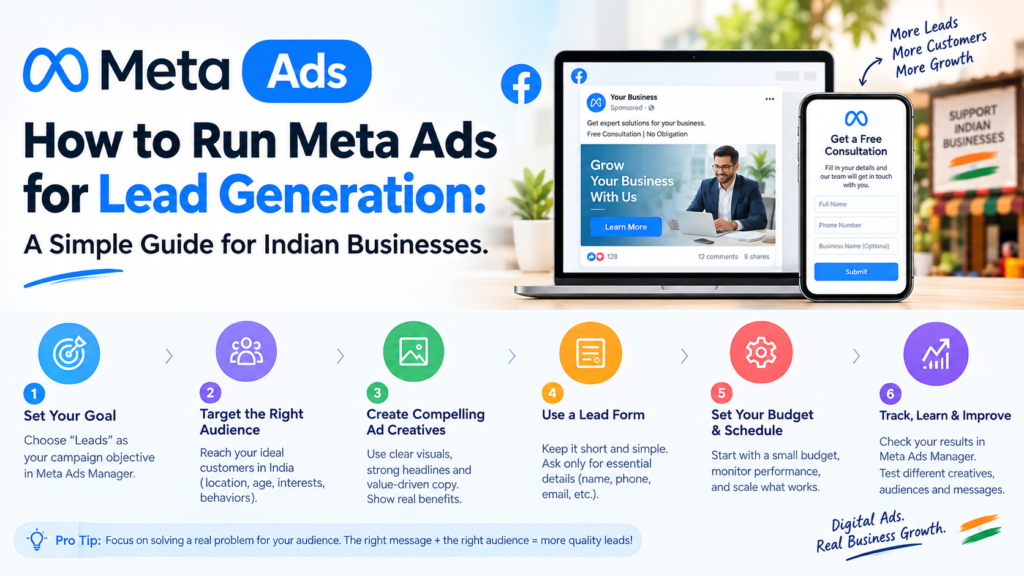
How to Run Meta Ads for Lead Generation: A Simple Guide for Indian Businesses | Maativerse News & Blogs / Performance Marketing How to Run Meta Ads for Lead Generation A simple guide for Indian businesses By Maativerse7 min readUpdated October 2026 In this guide Set one clear goal Know your audience Pick the right objective Create ads that stop the scroll Start with a small budget Track the right numbers Follow up fast Mistakes to avoid Most Indian businesses try Meta Ads (Facebook and Instagram), spend a few thousand rupees, get random inquiries, and quit. The problem is rarely the platform. It’s usually a missing strategy. Here is a simple step-by-step way to get real leads. 1Set one clear goal Decide what a “lead” means for you: a phone call, a WhatsApp message, a form fill, or a booking. Every ad should push toward one action only. 2Know your audience Be specific. “Everyone in India” is not an audience. Define: Location: your city, or a radius around your shop or office Age and interests: who actually buys from you Problem: what they want solved Local tip: Businesses in Delhi NCR often do better targeting 10 to 15 km around their location than a whole state. 3Pick the right campaign objective In Ads Manager, choose Leads, not Traffic or Engagement, if you want inquiries. You can collect leads in three ways: Instant FormsEasy for users, no website needed. WhatsApp click-to-chatVery effective in India. Landing pageBest when you want more qualified leads. 4Create ads that stop the scroll Hook in the first 3 seconds: ask a question or name a problem Short video or reel: often performs better than a static image One offer: a free consultation, free audit, or limited-time discount Clear CTA: “Book Now”, “Message Us”, “Get Your Free Quote” 5Start with a small, smart budget ₹300–₹500 a day Test 2 to 3 different creatives. Let them run at least 3 to 4 days before judging. Then increase the budget on the winners and pause the weak ones. 6Track the right numbers Don’t chase likes. Watch these instead: Cost per lead (CPL) Lead quality: are people actually answering your calls? Conversion rate: how many leads become paying customers Install the Meta Pixel on your website so Meta learns who your best customers are. 7Follow up fast A lead that waits a day is often a lost lead. Call or message within minutes. Even a simple WhatsApp auto-reply helps. Common mistakes to avoid Running ads without a clear offer Targeting too broad an audience Changing ads every day before they have data Ignoring follow-up Sending people to a slow or confusing website Final thoughts Meta Ads work well for Indian businesses when strategy comes first: a clear goal, the right audience, a strong offer, and quick follow-up. Want leads, not just clicks? Get a free strategy audit from Maativerse. Call +91 99908 89601. Get a free strategy audit
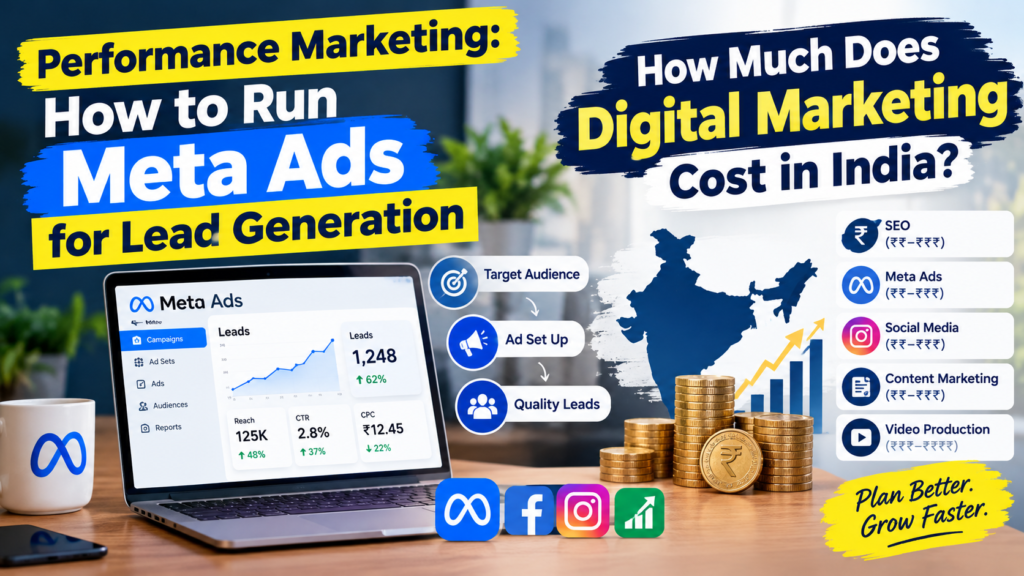
Performance Marketing: How to Run Meta Ads for Lead Generation; How Much Does Digital Marketing Cost in India
How to Run Meta Ads for Lead Generation | Maativerse How to Run Meta Ads for Lead Generation: A Simple Step-by-Step Guide Meta ads (Facebook and Instagram ads) are one of the fastest ways to get enquiries for your business. But many brands spend money and get low-quality leads, or no leads at all. This guide explains how to run Meta ads for lead generation the right way: from setting your goal to tracking results. It is written by the team at Maativerse, a performance marketing and brand building agency in Delhi NCR. What Are Meta Ads for Lead Generation? Meta lead generation ads are paid ads on Facebook and Instagram that ask people to share their contact details, such as name, phone number or email. You can collect leads in two main ways: through an instant form that opens inside the app, or by sending people to a landing page on your website. Before You Start: Three Things to Get Ready A clear goal: decide what a lead means for you, such as a call booking, a quote request or a demo. A strong offer: people share their details when they get something useful, like a free audit, a consultation or a discount. A follow-up plan: leads lose value fast. Decide who will call or message them, and how quickly. Step-by-Step: How to Run Meta Ads for Lead Generation Set up your accounts. Create a Facebook Page, an Instagram business account and an Ads Manager account. Install tracking. Add the Meta Pixel to your website so you can see what visitors do after clicking. Choose the Leads objective. In Ads Manager, pick the Leads objective so Meta shows your ad to people likely to enquire. Define your audience. Start with location (for example Delhi NCR), age and interests. Then test broader audiences and let Meta find the best people. Create your ad. Use a clear image or a short reel, a headline that names the benefit and a simple call to action. Build the lead form. Ask only for what you need. Fewer fields get more leads, while one or two extra questions improve quality. Set your budget and launch. Start small, test two or three ad versions and wait a few days before making changes. How Much Budget Do You Need? There is no fixed amount, because cost per lead depends on your industry, offer and audience. A good approach is to start with a small daily budget, find which ad and audience give the best leads, and then increase spend slowly on what works. Avoid changing the budget or the ad every day, as this resets learning and hides the real results. Metrics You Should Track Cost per lead (CPL): how much you pay for each enquiry. Lead quality: how many leads answer your call and show real interest. Click-through rate (CTR): shows whether your ad creative gets attention. Cost per customer: the number that matters most, because it connects ads to actual sales. Common Mistakes to Avoid Running ads with no clear offer or a confusing message. Using long forms that make people give up. Not calling leads quickly, so they forget about you. Judging results after one day instead of giving the ads time to learn. Counting only the number of leads and ignoring lead quality. Frequently Asked Questions Are Meta ads good for lead generation? Yes, especially for local businesses, services, education, real estate and e-commerce, because you can target people by location and interest. Should I use instant forms or a landing page? Instant forms usually give more leads at a lower cost. Landing pages often give better quality leads. Many brands test both. How long before I see results? You can get your first leads within a few days, but it usually takes two to four weeks of testing to find a steady, profitable setup. Want Meta ads that bring real enquiries? Talk to Maativerse and get a performance marketing plan built for your business.
Best Digital Marketing Agency for Lead Generation: How to Choose the Right Partner
Best Digital Marketing Agency for Lead Generation | Maativarse Best Digital Marketing Agency for Lead Generation: How to Choose the Right Partner Every business wants more leads, but not every lead is worth chasing. Clicks, likes and impressions look good in a report, yet they don’t pay the bills. What grows a business is a steady flow of qualified leads, people who are genuinely interested in what you sell and are ready to talk. That is why choosing the best digital marketing agency for lead generation is one of the most important decisions a growing brand can make. What Does a Lead Generation Agency Actually Do? A lead generation agency designs and runs a complete system that attracts the right audience, captures their details and moves them toward a sale. This usually includes: Audience research and customer persona building Paid advertising on Google, Meta and LinkedIn Landing page design and conversion rate optimisation (CRO) SEO and content marketing that bring in organic leads Email and WhatsApp nurturing campaigns Lead tracking, reporting and sales-funnel analysis Why Lead Generation Needs a Specialist General marketing builds awareness. Lead generation is built around measurable results: cost per lead, lead quality, conversion rate and return on ad spend. A specialist agency treats every rupee of your budget as an investment and keeps testing, tweaking and improving until the numbers move in the right direction. Key Qualities of the Best Digital Marketing Agency for Lead Generation 1. A Data-Driven Approach The best agencies don’t guess. They rely on analytics, A/B testing and clear KPIs to decide what to scale and what to stop. Ask any agency how they track performance and how often they share reports. 2. Focus on Lead Quality, Not Just Quantity A thousand irrelevant enquiries waste your sales team’s time. A good agency defines the ideal customer first, then builds targeting, messaging and forms that filter out poor-fit leads. 3. Multi-Channel Expertise Your customers don’t live on one platform. A strong partner combines search ads, social media, SEO, email and remarketing so that your brand stays in front of prospects at every stage of their decision. 4. High-Converting Landing Pages Traffic is useless if your page can’t convert it. Look for an agency that builds fast, mobile-friendly landing pages with clear offers, strong calls to action and simple forms. 5. Transparent Communication You should always know where your budget is going and what results it is producing. Regular reports, honest feedback and a dedicated point of contact are signs of a reliable agency. How Maativarse Approaches Lead Generation At Maativarse, lead generation starts with understanding your business, not with launching ads. The process typically follows these steps: Discovery: understanding your product, market, competitors and sales goals. Strategy: choosing the right channels, audiences and budget split. Creative and Content: crafting ads, copy and landing pages that speak to your buyer. Launch and Optimisation: running campaigns and improving them continuously using live data. Nurturing: following up with leads through email, calls and WhatsApp so they don’t go cold. Reporting: sharing clear insights on leads, cost per lead and conversions. Questions to Ask Before Hiring an Agency Have you worked with businesses in my industry? How do you measure lead quality? What does your reporting look like, and how often will I receive it? Who will manage my account day to day? What is the contract period, and are there any hidden charges? Common Mistakes Businesses Make Choosing an agency only because it quotes the lowest price Expecting instant results without giving campaigns time to optimise Ignoring follow-up, since leads need fast, consistent contact Not aligning marketing and sales teams on what a “good lead” means Final Thoughts The best digital marketing agency for lead generation is the one that understands your goals, respects your budget and is accountable for results. Look for a partner who combines strategy, creativity and data, and who treats your growth as their own. With the right team behind you, lead generation stops being a gamble and becomes a predictable engine for business growth. Ready to grow your business with quality leads? Connect with Maativarse today and let’s build a lead generation strategy that delivers real results.
7 Questions to Ask Before You Hire a Digital Marketing Agency in Delhi
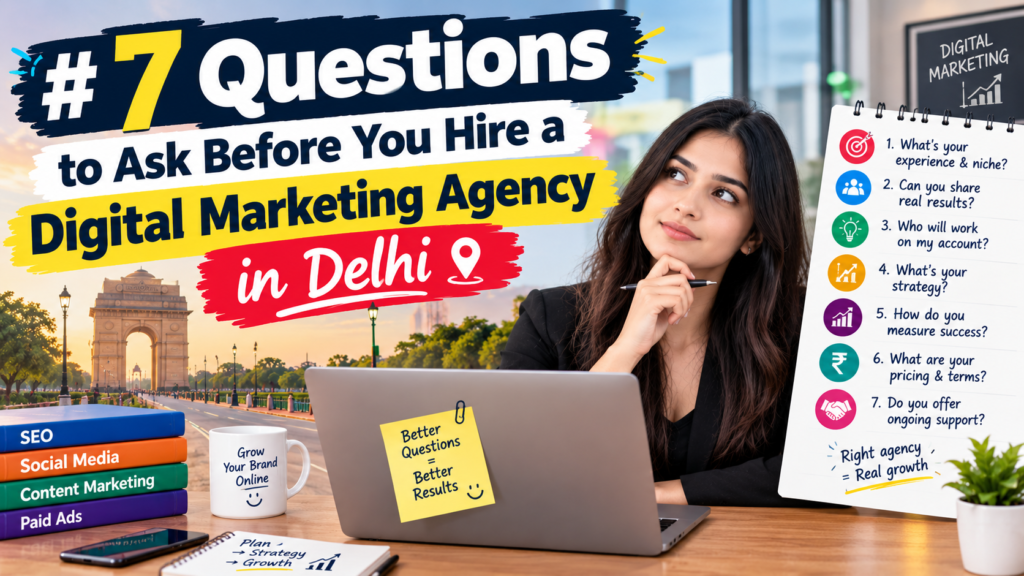
7 Questions to Ask Before You Hire a Digital Marketing Agency in Delhi Hiring guide 7 Questions to Ask Before You Hire a Digital Marketing Agency in Delhi By the माटीVERSE team, 5 min read Delhi has hundreds of digital marketing agencies. Most have a polished website, a confident pitch, and a list of services that looks almost identical to the next one’s. The difference shows up in how they answer a few practical questions. Ask these seven before you sign anything, and you’ll learn far more than any proposal deck can tell you. 1 What exactly will you do, and how does it connect to my business goal? “We’ll handle your SEO, ads, and social media” describes activities, not outcomes. A good agency starts from what you want and works backwards. Good answer They ask about your goals, customers, and offer before suggesting any service, and explain why each activity supports your goal. Red flag A fixed package pitched before they understand your business. They answered this clearly 2 How will you measure results, and what will I see in reports? Likes, impressions, and clicks are easy to report and easy to inflate. What matters is whether the work produced enquiries, sales, or sign-ups. Good answer They name the numbers they’ll track against your goal, such as leads, cost per lead, or conversion rate, and show a sample report. Red flag Reports full of vanity metrics, or vague promises like “we’ll improve your presence.” They answered this clearly 3 Who will actually work on my account? The person who pitches you is often not the person who does the work. Know who handles strategy, who runs your ads, and who you can reach when something goes wrong. Good answer They introduce the real team or point of contact, explain roles, and say how often you’ll hear from them. Red flag No names, just “our team will handle it.” They answered this clearly 4 Have you worked with businesses like mine, and can I see real examples? Experience with your industry or stage shortens the learning curve. Real examples show how an agency thinks, not just what it claims. Good answer Case studies covering the problem, approach, and outcome, or an honest account of how related experience applies to you. Confidential work can still be described. Red flag Only logos with no detail, or results nobody can explain. They answered this clearly 5 Who owns the accounts, data, and website? Your ad accounts, analytics, social profiles, and website are business assets. If the agency owns them, leaving can mean starting from zero. Good answer Everything is set up in your name, with the agency given access. You can see your ad spend and data directly at any time. Red flag Ads run from the agency’s own accounts, or hesitation to give you access. They answered this clearly 6 What does it cost, what’s included, and what’s the contract? Billing surprises damage trust fast. Know the monthly fee, what’s included, what ad spend is paid separately, and how to exit if it isn’t working. Good answer A clear written scope, a separate line for ad budget, and reasonable notice terms. Red flag Guaranteed rankings or results. No one can promise a fixed position on Google. Be careful with very long lock-in contracts too. They answered this clearly 7 How will we work together, and what happens if results are slow? Marketing doesn’t always work first time. What separates a good agency is what it does next. Good answer A regular review rhythm, honest explanations when something underperforms, and a plan to test and adjust. They also say what they need from you: approvals, access, product information. Red flag Excuses without a plan, or silence until the renewal date. They answered this clearly Score your next agency meeting Take these seven questions to every meeting. After each one, tick the box if the answer was clear and specific. Don’t pick the loudest pitch or the cheapest quote. Pick the agency that explains its thinking best and is honest about what it can and can’t do. 0 / 7 Tick the questions they answered clearly. The right agency won’t just run campaigns. It will help you decide what’s worth doing, show you whether it’s working, and keep your business assets in your hands. See how we’d approach your business At माटीVERSE, we start with your goals and your audience, then build SEO, ads, social media, and web presence around one clear plan. Get a free strategy audit
Performance Marketing Explained: Pay for Results, Not Guesswork
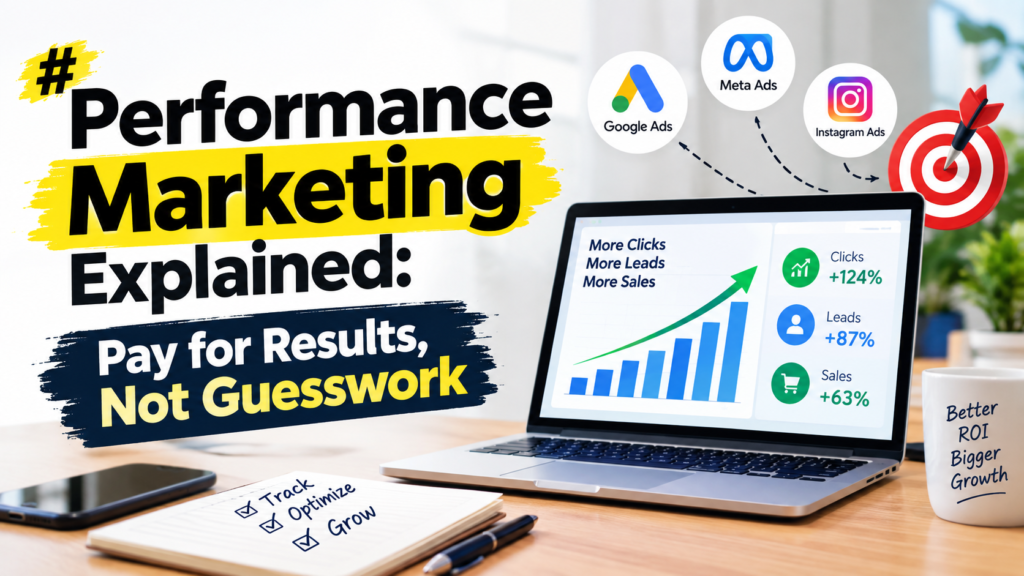
Guide Performance Marketing Explained: Pay for Results, Not Guesswork By the माटीVERSE team, 5 min read ImpressionsClicksEnquiries Only the last bar pays the bills. Many businesses run ads the same way: set a budget, launch, and hope. A few weeks later the money is spent, the report shows clicks and impressions, and nobody can say whether it worked. Performance marketing fixes exactly that. Every rupee is tied to a measurable action: an enquiry, a purchase, a sign-up. What it actually means Traditional advertising pays for exposure: a billboard, a newspaper slot, a TV spot. You hope people notice, but can’t see who responded. In performance marketing, you decide in advance what counts as success and measure everything against it. The campaign is judged by results, not by how many people saw it. If something isn’t working, you see it quickly and change it. Judge ads by what they deliver, not what they display. Where it happens Search adsReach people actively looking for what you offer. Social adsMeta, LinkedIn, YouTube: reach the right audience before they search. RetargetingBring back visitors who didn’t act the first time. Affiliate and partnersPay partners only when they deliver a result. The right mix depends on your audience and goal. A local service business may get most value from search, while a new brand may need social ads to create demand first. The metrics that matter Conversion rateThe share of visitors who take the action you want. CPA / CPLWhat you spend to win one customer or one enquiry. ROASRevenue earned for each rupee spent on ads. CAC vs. valueWhether a customer is worth more than it cost to win them. Clicks and impressions help with diagnosis, but they aren’t results. A campaign with cheap clicks and no enquiries is losing money quietly. Tracking comes first The most common reason performance campaigns fail has little to do with the ads. It’s missing or broken tracking. If form fills, calls, and purchases aren’t recorded, you’re optimizing blind, and the ad platforms can’t learn who your best customers are either. Before you spend, check that conversions are set up as goals, your analytics and ad accounts are connected, and you can tell which campaign produced which enquiry. Five common mistakes 1. Starting without a clear goal “More awareness” isn’t a performance goal. “Twenty qualified enquiries a month at an acceptable cost” is. 2. Sending traffic to a weak page The best ad can’t rescue a page with no clear message or next step. A fast, focused page usually beats your homepage. 3. Judging too early or too late Changing everything after two days stops the platform learning. Waiting two months without review wastes budget. 4. Never refreshing the creative Audiences tire of the same ad. Test different messages and formats, and keep what works. 5. Ignoring lead quality Cheap leads that never become customers aren’t cheap. Track what happens after the enquiry. How to start Define one goal. Leads, sales, or sign-ups, with a rough target. Set up tracking. Make sure every important action is recorded. Fix the landing page. One message, one action, fast on mobile. Start small, test widely. Try a few audiences and messages on a modest budget. Review on a rhythm. Check weekly, move budget to what works, pause what doesn’t. Is your business ready? Performance marketing works best when your offer is clear, your website can convert visitors, and you can follow up on enquiries quickly. If one of these is weak, fixing it first makes every ad rupee go further. It isn’t about spending more. It’s about spending with clarity: knowing what you want, measuring whether you got it, and improving steadily. Running ads without knowing what they deliver? At माटीVERSE, we build performance campaigns on top of strategy: your goals, your audience, and your tracking first, so your budget works from day one. Get a free strategy audit