
Podcast Shoot in Delhi NCR: Everything You Need Before You Hit Record
How Much Does Digital Marketing Cost in India? (2026 Price Guide)
How Much Does Digital Marketing Cost in India? (2026 Price Guide) | Maativerse News & Blogs / Performance Marketing How Much Does Digital Marketing Cost in India? The 2026 price guide By Maativerse6 min readUpdated October 2026 In this guide The short answer Cost by package level Who you hire matters What affects the price Don’t forget ad budget Package vs separate vendors How to choose your budget Red flags to avoid “How much will it cost?” is the first question every business owner asks. The honest answer is: it depends. But that doesn’t help you plan a budget. So here is a clear, simple breakdown of what digital marketing really costs in India in 2026. The short answer ₹15,000 to ₹5,00,000+ a month The range depends on the services you need and your business goals. The gap is huge because a small local shop and a national brand need very different things. What you pay by package level Level Monthly cost Best for Basic ₹15,000 – ₹40,000 Small local businesses, simple posting Growth ₹40,000 – ₹1,00,000 Businesses that want leads and steady growth Advanced ₹1,00,000 – ₹2,50,000 Brands running ads, SEO, video and reporting together Who you hire matters For social media management alone, here is what each option typically costs per month: Option Monthly cost Good to know Freelancer ₹15,000 – ₹50,000 Affordable, but usually one person Boutique agency ₹30,000 – ₹1,50,000 Focused team, personal attention Full-service agency ₹1,00,000 – ₹5,00,000+ Strategy, creative, ads and reporting Hiring in-house is another route. A social media manager’s salary in India ranges from ₹4,00,000 to ₹12,00,000 a year, and that is only one person, without designers, video editors or ad specialists. What affects the price Number of services: social media, SEO, ads, website, video, PR Content volume: how many posts, reels and videos each month Ad budget: separate from agency fees, paid directly to Meta or Google Agency experience: better strategy and results usually cost more Your goal: brand awareness costs less than aggressive lead generation City and competition: Delhi NCR and other metro markets are generally pricier Don’t forget the ad budget Agency fees and ad spend are two different costs. If you run Meta Ads for lead generation, a good starting point is ₹300 to ₹500 per day. That is ₹9,000 to ₹15,000 a month, paid to the platform. Remember: Add the ad budget on top of the management fee when you plan your monthly spend. Is a package cheaper than separate vendors? Usually, yes. Bundled packages are often more cost-effective because one integrated team handles SEO, paid media, content, design and reporting. It also means one point of contact and a consistent brand voice. How to choose the right budget Start with your goal. Do you want awareness, leads or sales? Set a realistic monthly limit. Include both agency fees and ad spend. Ask what is included. Number of posts, videos, reports and ad management. Look at results, not promises. Be careful of anyone who guarantees overnight growth. Plan for 3 to 6 months. Digital marketing builds over time. Red flags to avoid Very low prices with no clear deliverables Guaranteed followers or “first page on Google” promises No monthly reporting No strategy, only posting Final thoughts There is no single price for digital marketing. The right budget is the one that matches your goals, with a clear plan behind it. Start small, track real numbers like cost per lead, and grow what works. These figures are market estimates and change with services, city and agency. Always ask for a detailed quote. Not sure what budget fits you? Get a free strategy audit from Maativerse. Call +91 99908 89601. Get a free strategy audit How Much Does Digital Marketing Cost in India? (2026 Price Guide) | Maativerse News & Blogs / Performance Marketing How Much Does Digital Marketing Cost in India? The 2026 price guide By Maativerse6 min readUpdated October 2026 In this guide The short answer Cost by package level Who you hire matters What affects the price Don’t forget ad budget Package vs separate vendors How to choose your budget Red flags to avoid “How much will it cost?” is the first question every business owner asks. The honest answer is: it depends. But that doesn’t help you plan a budget. So here is a clear, simple breakdown of what digital marketing really costs in India in 2026. The short answer ₹15,000 to ₹5,00,000+ a month The range depends on the services you need and your business goals. The gap is huge because a small local shop and a national brand need very different things. What you pay by package level Level Monthly cost Best for Basic ₹15,000 – ₹40,000 Small local businesses, simple posting Growth ₹40,000 – ₹1,00,000 Businesses that want leads and steady growth Advanced ₹1,00,000 – ₹2,50,000 Brands running ads, SEO, video and reporting together Who you hire matters For social media management alone, here is what each option typically costs per month: Option Monthly cost Good to know Freelancer ₹15,000 – ₹50,000 Affordable, but usually one person Boutique agency ₹30,000 – ₹1,50,000 Focused team, personal attention Full-service agency ₹1,00,000 – ₹5,00,000+ Strategy, creative, ads and reporting Hiring in-house is another route. A social media manager’s salary in India ranges from ₹4,00,000 to ₹12,00,000 a year, and that is only one person, without designers, video editors or ad specialists. What affects the price Number of services: social media, SEO, ads, website, video, PR Content volume: how many posts, reels and videos each month Ad budget: separate from agency fees, paid directly to Meta or Google Agency experience: better strategy and results usually cost more Your goal: brand awareness costs less than aggressive lead generation City and competition: Delhi NCR and other metro markets are generally pricier Don’t forget the ad budget Agency fees and ad spend are two different costs. If you run Meta Ads for lead generation, a good starting point is ₹300 to ₹500 per day. That is ₹9,000 to
What Is Digital PR and Why Brands Need It in 2026
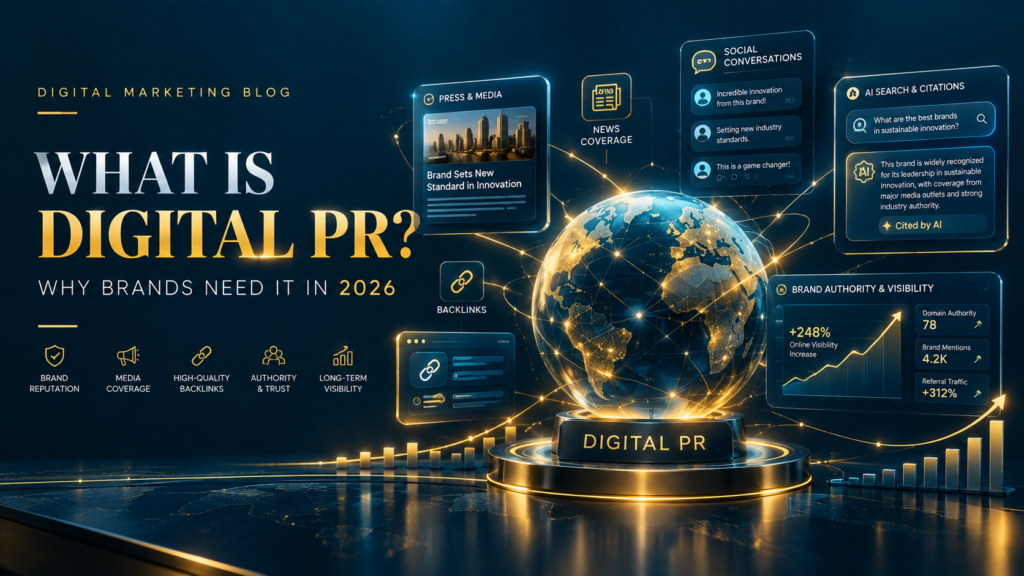
What Is Digital PR and Why Brands Need It PR & Media Coverage What Is Digital PR and Why Brands Need It in 2026 Digital PR helps brands earn trust through coverage on news sites, blogs and podcasts. Here is how it works and how to start. 4 October 20266 min read Great products and services do not speak for themselves. People trust what trusted voices say about them, and that is exactly where digital PR comes in. What is digital PR? Digital PR is the practice of earning coverage for your brand on online publications, news websites, blogs, podcasts and other digital platforms. Instead of paying for ad space, you give journalists, editors and creators a reason to talk about you: a news announcement, an expert opinion, a useful story or a milestone. The result is not an advertisement. It is a mention, feature or article written by someone else, which is why audiences tend to trust it more. Digital PR vs traditional PR Both aim to build reputation, but they work in different spaces. Point Traditional PR Digital PR Main channels Print, TV, radio, events News sites, blogs, podcasts, social platforms Reach Depends on the outlet’s audience Can be shared, searched and found online Tracking Harder to measure Easier to track through links, traffic and mentions Lifespan Short, tied to the issue or broadcast Stays online and can keep bringing visitors Most brands do best when both work together, but digital PR is usually the faster and more measurable place to start. Digital PR for brands: key benefits Credibility When a respected publication features your brand, readers see it as proof, not promotion. Wider visibility Your brand reaches audiences who may never have found you through your own channels. Search support Links and mentions from quality websites can support your visibility in search results over time. Audience trust Consistent, honest coverage helps customers, partners and investors see you as an established name. Press release writing: what to get right A press release is still one of the most useful digital PR tools, but only when it carries real news. Keep these points in mind: Lead with the news. Put the most important point in the headline and first paragraph. Keep it factual. Use clear dates, names and numbers you can back up. Avoid exaggerated claims. Add a quote. A short statement from a founder or leader gives the story a human voice. Include contact details. Make it easy for journalists to reach you for more information. How to get media coverage for brands Coverage is earned by being useful to the publication and its readers. A few approaches that work well: Find a real story. A launch, partnership, award, new data or an expert view on a trending topic gives editors a reason to write. Choose the right outlets. Pitch publications and writers who already cover your industry. Offer thought leadership. Share expert articles and opinions that help readers, not just promote your brand. Personalise your pitch. A short, relevant message to the right person works better than a mass email. Follow up politely. One respectful follow-up is fine. Repeated reminders are not. Mistakes that weaken digital PR Avoid these: Sending press releases with no real news Mass-emailing the same pitch to every outlet Making claims you cannot prove Expecting instant results from a single article A simple digital PR plan to start Pick one clear story about your brand, list ten relevant outlets or writers, prepare a short press release or expert article, and pitch it personally. Track which mentions and links you earn, then repeat with a new story every month. Final thoughts Digital PR is about earning attention honestly. When your brand shares useful, truthful stories with the right publications, you build trust that advertising alone cannot buy. Start small, stay consistent and focus on stories that matter to your audience. Want your brand featured in the right publications? Talk to us about a digital PR plan built around your story. Talk to Us